Last Updated: 25 May, 2023

Police Officer

Becoming a police officer is an immensely satisfying career choice that offers many personally and professionally rewarding opportunities. Police officers are highly respected and enjoy a large amount of public support for their commitment to civil service and for putting their lives on the line every day.
What Is a Police Officer?
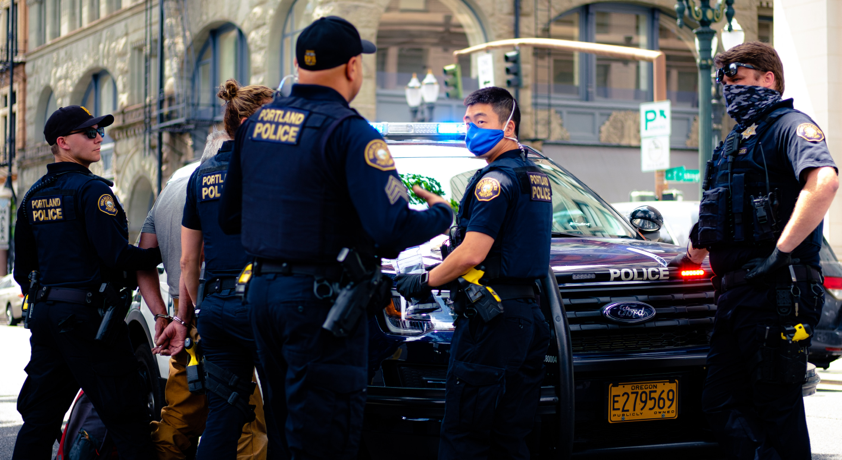
A police officer is a sworn law enforcement agent who is responsible for the enforcement of laws, the investigation of crime, and the protection of life and property. Police officers maintain public order and safety, deter and investigate criminal activity, apprehend criminal offenders, respond to emergencies, and provide support to victims of crime.
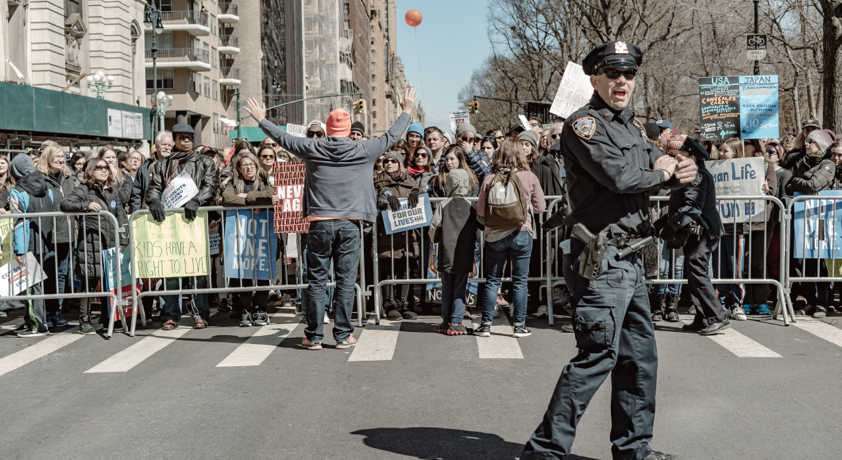
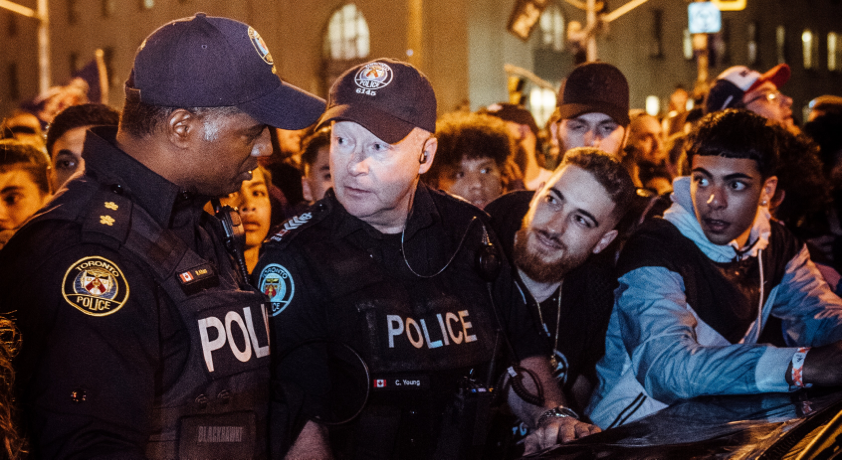
In addition to their law enforcement duties, police officers also play an important role in community outreach and engagement. As the most visible representatives of the government, uniformed police officers often act as liaisons between the community and the department, working to build trust and foster positive relationships. These relationships are essential to effective policing and help to ensure that the community feels comfortable interacting with and cooperating with the police.
Police Officer Duties
Few careers exist in the world where you’ll frequently have the chance to save a person’s life, or countless lives, make a real difference in your community, and enjoy the close bond and respect of your peers who proudly serve along with you. Such is the life of a police officer. Police officers are on the frontline of public safety, tasked with maintaining order and protecting the lives and property of citizens.
Each day, police officers perform a wide variety of duties, all of which are essential to the effective functioning of the department and the safety of the community. The specific duties of a police officer vary depending on their rank, assignment, and department, but all officers perform some combination of the following tasks:
- Responding to emergencies and calls for assistance
- Patrolling their assigned beats
- Conducting criminal investigations
- Enforcing parking and traffic laws
- Pursuing, arresting, and detaining criminal suspects
- Writing reports and maintaining records
- Giving testimony in court hearings
- Interacting with the community to educate and build relationships
- Provide support to victims of crime
Steps to Become a Police Officer
Becoming a police officer is an excellent way to serve your community and make a difference in the world, but it’s important to understand that the job is not for everyone. It is a highly challenging career that comes with significant responsibility and risks. If you are considering becoming a police officer, it is important to understand the physical and mental demands of the job, as well as the steps necessary to complete the training and education required.
Here we outline five key steps of the application process:
1. Meet the Minimum Qualifications & Eligibility Requirements
The minimum qualifications and selection standards for LEO positions are established locally and vary from region to region. Eligibility criteria and training requirements are governed by state law and local regulations, so it is important that all candidates interested in becoming police officers research the specific prerequisites of the department they plan on applying to before they apply.
Below, we summarize the minimum requirements of the California Commission on Peace Officer Standards and Training (POST), so candidates across the country will have a general understanding of the typical pre-requisites they must meet before entering the application process:
Minimum Age
Applicants must be at least 18 years old to sit for the National Law Enforcement exam. Some agencies set the standard higher, for example, many agencies require applicants to be at least 21 years old before applying.
U.S. Citizen or Permanent Resident Alien
Applicants must be a citizen or permanent resident alien who has applied for and is eligible to become a citizen of the United States. Many agencies require officers to be U.S. citizens at the time of their appointment.
Valid Driver’s License
Applicants must possess (and maintain) a driver’s license to operate an automobile at the time of their initial application and throughout the certification process. Agencies require a valid license in good standing at the date of hire.
Minimum Level of Education
At a minimum, all applicants must have a high school diploma from an accredited U.S. high school, obtain a GED, or pass a State High School Proficiency Examination. Some law enforcement agencies require candidates to have earned some college credits or a four-year degree, while others offer incentive pay programs for officers who pursue a bachelor’s degree program or higher.
No Felony Convictions
Applicants must pass a fingerprint and criminal background investigation which reveals any record of criminal activity and validates the applicant’s personal history to ensure the applicant is of good moral character. Fingerprints are sent to the State Department of Justice (DOJ) and the Federal Bureau of Investigation (FBI). Candidates are disqualified if they have been convicted of a felony or specific misdemeanors. For example, many agencies will disqualify a candidate if they have been convicted of an offense involving domestic violence or any misdemeanor that prohibits the applicant from owning or possessing a firearm.
2. Pass the Hiring and Selection Process
Candidates who meet all of the general qualifications and eligibility requirements (detailed above) must pass an additional set of written and physical exams, medical and psychological evaluations, and preliminary assessments administered by the law enforcement agency they are applying to before they can be hired.
The hiring process can take several months to complete and may vary slightly from agency to agency, but all officers must complete the same core set of requirements before they can be sworn in and begin working.
Pass the “Frontline National” Law Enforcement Exam (or Equivalent)
The Frontline National Exam for Law Enforcement consists of three components – a reading ability test, a written language ability test, and a video-based human-relations test – which seek to assess the candidate’s reading and writing ability, along with their ability to exercise good judgment in law enforcement. Agencies that do not require the Frontline National Exam often require applicants to pass a similar exam designed by the State Commission on Police Officer Standards and Training (POST).
Pass the Physical Abilities Test (PAT)
Candidates who sit for the Frontline National law enforcement exam will be notified by the City and County of their pass/fail status. Candidates who earn a passing score on the exam will then be notified to take a Physical Abilities Test (PAT), which is also a pass/fail examination.
Through a series of physical exercises, the Physical Abilities Test assesses the cardio-respiratory fitness, muscular endurance, agility, and muscular strength needed to perform the essential physical job tasks required of police and detectives. Physical readiness is critical to the success of patrol officers, so there are typically no waivers or exceptions to the PAT – the test must be completed in its entirety and in accordance with the minimum standards set by the agency, academy, or department.
Pass an In-Person Oral Interview
Candidates who pass the first two components of the evaluation process (the FrontLine National law enforcement exam and Physical Ability Test) will be invited to sit for an oral interview with an Academy Manager or member of the department office of recruitment. The oral interview is also a pass/fail examination, and it should be treated as a formal interview.
During the interview, the academy manager will assess the candidates’ demeanor and suitability to become certified police officers. The interview will consist of questions that offer the candidate an opportunity to demonstrate skills and abilities that are not tested by other examination components, such as problem-solving, communication, and interpersonal skills.
Candidates who pass the oral interview component will be considered eligible and will have their names added to the agency’s eligible list. Placement on this list does not guarantee employment, and there are many additional processes and evaluations for each candidate once they are selected from the eligible list. Nonetheless, this is a major step for candidates as they progress through the hiring process, on their way to earning an appointment in law enforcement.
3. Pass Additional Testing Requirements & Personal History Evaluation
Candidates that meet the minimum eligibility requirements and have passed all three components of initial testing (exam, PAT, and oral interview) may be selected by the Police Department to advance further in the hiring and selection process. At this point that the department will conduct a “deep dive” investigation into the qualifications, background, and health of the candidate, to further screen the candidate’s fitness for employment.
There are no nationwide standards for the screening of police officers – laws and regulations establishing minimum requirements are set by state and local agencies – however, there are many common procedures, outlined below, that most departments will administer to determine which candidates will advance to the academy and receive an appointment.
Personal History Questionnaire (PHQ) Evaluation
A Personal History Questionnaire (PHQ) is a survey presented in a multiple-choice format, that typically accompanies a full criminal background investigation of the candidate. The purpose of the evaluation is to gather information about the applicant’s personal and professional background and to reveal any criminal associations or history.
Candidates are expected to answer the questionnaire truthfully – any inconsistencies or omissions between the answers provided in the PHQ and the information revealed by a comprehensive background check may be a reason for rejection.
Employment, Character, and Background Check
Police officers are expected to approach their job and perform their duties with the highest level of moral character and integrity, which means that every applicant is subject to a thorough employment, character, and background check.
A criminal background check will include inquiries about any felony convictions, misdemeanors that would prevent an applicant from owning or possessing a firearm, serious violations of the law (such as domestic violence), criminal or gang affiliations, or any repeated violations that demonstrate a lack of personal responsibility.
An examination of the applicant’s professional experience will look for instances of the candidate struggling to accept supervision, failing to cooperate as a member of a team, and examples of insubordination. Other reasons for rejection include repeated instances of poor decision-making and judgment, sub-standard work habits, truthfulness, and issues with personal accountability.
Review of Judicial and Driving Records
It is essential that all police officers are able to safely operate a motor vehicle, so all agencies require applicants to possess a valid driver’s license in good standing to be employed. Candidates must disclose all motor vehicle violations on their Personal History Questionnaire (PHQ), which will be verified when driving records are obtained from the Department of Motor Vehicles. If any of the following misdemeanor violations occurred in the past three years prior to the date of application, the candidate may be disqualified:
- Drunk driving
- Reckless driving
- Hit and run with personal injury
- Hit and run with property damage
- Violations of the law that demonstrate a disregard for safety
- Suspended license
- Negligent operator probation
- Two moving violations in the past 24 months or three in the past 36 months
Testing for Use of Controlled Substances
A required component for all candidates is a test for the use of controlled substances. Any use of a controlled substance that occurs after the initial application date may result in rejection, especially illegal drugs, which trigger a mandatory rejection of any candidate. Information provided by the applicant about prior use of controlled substances may result in rejection as well, depending on how frequent and recent the usage occurred.
Polygraph Examination
Over the course of the hiring and selection process, candidates will provide background information about their personal and professional lives and will answer questions about their use of controlled substances, criminal history, driving record, history of employment, and medical history.
Many agencies will administer a polygraph exam to determine the accuracy of a candidate’s responses, so it is essential that all candidates provide truthful answers throughout the process – discrepancies between self-reported answers and information revealed by background checks and tests are a reason for rejection.
Medical & Psychological Examination
A rigorous medical and mental health screening is required of all candidates before they can be offered employment as a member of the police force. Each individual must be evaluated for any current or past medical conditions that may compromise the candidate’s fitness for the job, including any mental health issues that may affect the individual’s suitability for a law enforcement career.
A medical examination will likely include a check for any physical conditions or injuries that would preclude an officer from performing the essential functions of the position. It is common for blood and urine samples to be collected, along with height and weight measurements. The psychological examination will likely be conducted by a licensed clinical psychologist, who may administer a written test and clinical interview.
Hearing & Vision Testing
It goes without saying that police officers must be physically fit to effectively carry out their duties. This includes a candidate’s vision and hearing, which are both tested prior to their appointment. While each situation is evaluated on an individual basis, it is common practice for departments to reject candidates who fail vision and hearing tests.
Requirements vary by state and locale, but generally, candidates are expected to have visual acuity of 20/30 – unaided or corrected by contact lenses or eyeglasses. Candidates must demonstrate command of all visual fields, pass a color vision test, and achieve a passing score on an auditory threshold test to qualify for duty.
4. Graduate from the Police Academy
Candidates who meet all minimum qualifications and successfully demonstrate their fitness for the job will receive an invitation to the police academy, where they will participate in an intensive period of physical and academic training.
Police academies, which are commonly referred to as law enforcement training facilities, are schools that offer specialized courses to certify people entering the field of law enforcement. While there is definitely some overlap and similarity between the core material and requirements offered by academies in different states, there are no federal criteria for police certification. This means that each state is responsible for defining its own courses and required hours. For that reason, becoming a certified law enforcement officer in Michigan, for example, maybe a shorter process than doing so in California.
Program Duration
The length and content of the program you attend vary depending on the certification requirements established by the state you plan to work in. The program duration will include several hundred hours of course work (typically 320 to 800 hours) and take anywhere between six and eight months to complete. The Los Angeles Police Department, for example, divides its instruction down into component parts, totaling approximately 828 hours of instruction.
Tuition
Attending the police academy is a requirement for all new law enforcement officers, so you do not have to pay tuition to attend the academy. Recruits receive their full starting salary while they go through training.
The exception is when you attend the academy prior to receiving a job offer. In some states, recruits can pay tuition to attend a police academy or police training center before applying to become a police officer. In these circumstances, the cost to attend training will come out of your own pocket. Costs to attend a police academy are typically less than $5,000 and many police departments offer tuition reimbursement programs that cover a percentage of the out-of-pocket tuition once you are hired.
Instructors
Academies are often affiliated with community colleges or training centers operated by state and county departments. While attending a police academy, recruits receive training and instruction from senior police officers who have earned special state certification to teach courses.
Instructors must typically possess a post-secondary degree (in criminal justice or a closely related field) as their minimum level of education and have several years of experience to qualify as an instructor. Most instructors must also have a firm grasp of the law and be certified in topics such as defensive tactics, CPR, hazardous materials, firearms, driving, racial profiling, and personal tasks.
Physical Training
Physical training at the police academy is no cakewalk. It’s rigorous, demanding, and exhausting. A police cadet entering the academy will face an uphill challenge – from beginning to end – to pass intense fitness assessments while also undergoing academic training.
The State of California, for example, recommends that recruits prepare themselves for the academy with a daily regimen of 80 push-ups and 250 crunches, just to be ready for Day 1. Physical conditioning throughout a recruit’s time in the academy will typically include regular running, weight training, agility exercises, and training in specific movements used in self-defense.
Fitness Exam
To be hired as a law enforcement officer out of the academy, you will have to pass a fitness exam, so it is essential that you don’t underestimate the importance of coming prepared from the first day. Reports released by the New York Police Department estimate that two-thirds of the recruits entering academy programs are unable to pass the final physical fitness test when they arrive at the academy. Needless to say, you don’t want to be one of the recruits who fails the first physical exam.
Academic Curriculum
Physical fitness and self-defense training are important focal points of the academy, but a majority of the training and education you will receive will be in the classroom. The daily demands of police work require an officer to constantly reference their knowledge of how to properly enforce the law, how to de-escalate tense situations, how to manage stress, and how to interact with the public in a professional manner. For this reason, a significant portion of your time in the academy will be spent honing the intellectual tools you will use on the job.
5. Complete Field Training & Performance Review
Recruits who successfully graduate from the academy officially become certified police officers, having met all of the physical and academic requirements to transition from civilian to police officer. However, this doesn’t mean that freshly minted officers are immediately thrown into the job without support, supervision, or further evaluation.
After graduation, rookie officers enter a field training program, which is a probationary period, or “training cycle”, where new officers are paired with an experienced or senior officer who helps prepare them to function as a solo beat officer. This training cycle typically consists of four to five months (16 -20 weeks) of intensive on-the-job training and daily performance reports. The purpose of this training and evaluation is to help transition new officers from a controlled environment to real police life.
After meeting specific performance standards and demonstrating an ability to handle situations assigned to them by their FTO, new officers will be certified for solo patrol duty.